Vendedora de Sucesso (SaaS)
A clarity-first web platform for small sellers: track expenses, organize schedules, manage stock, and decide with confidence.
Discovery phase
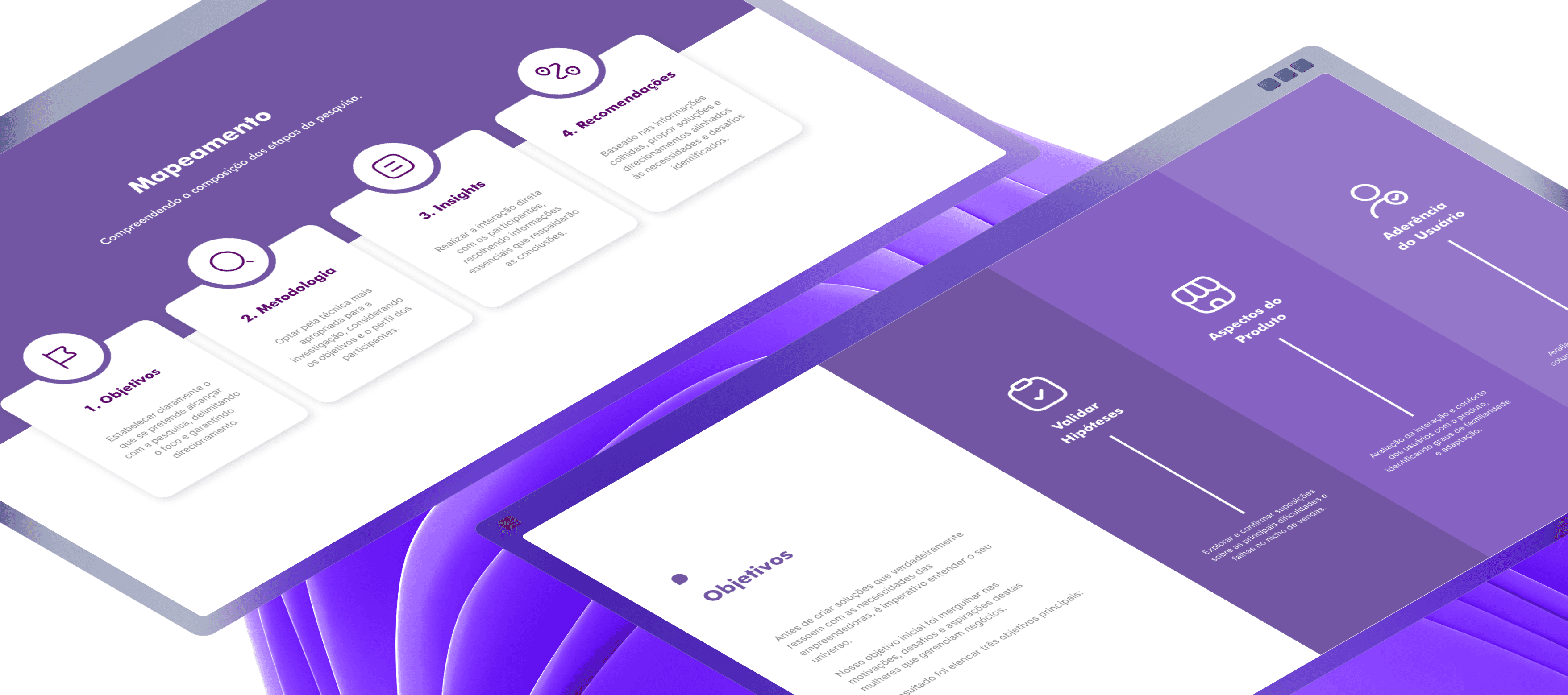
A single-threaded, end-to-end approach aligned branding and product discovery from day one. The market scan focused on women small-business owners and sales professionals, mapping adjacent tools, tone of voice, and onboarding patterns to avoid clichés and surface opportunities for clarity and trust. Working hypotheses centered on fragmented records across apps, low visibility of cash flow, weak follow-up cadence, and manual stock control.
A quantitative survey validated and refined those hypotheses. The questionnaire captured demographics, tech familiarity, routines, and channel usage; the resulting charts revealed behavior clusters that informed MVP priorities: make recurring tasks effortless (record expense, schedule follow-up, update stock), surface immediate visibility through simple summaries, and maintain inclusive, direct language across the experience.
Ideation Development
Insights were translated into information architecture and lean workflows spanning Authentication/Onboarding, Dashboard, Finances, Contacts, Agenda, Products/Inventory, Reports/Insights, and an in-product Support area. Proto-personas, Jobs-to-Be-Done, and success criteria (time to complete key tasks, rate of next-step defined, error reduction) provided decision guardrails. Low-fidelity flows exposed edge cases and states before moving to interactive prototypes.
Design choices favored one-screen completion for frequent actions, predictable navigation, and explicit empty/error/success states. A hypothesis backlog tied to each module guided iteration, and a content strategy defined microcopy and tutorial structure. The outcome was a navigable prototype and a scoped backlog ready for implementation.
UX/UI
Software as a Service
Visual Identity
Visual Exploration
Brand exploration avoided gendered stereotypes in favor of a confident, pragmatic tone. Palette and typography were selected for legibility and WCAG contrast, with calm primaries and neutral surfaces to support data density. Iconography, spacing, and type scale emphasized scannability for table-heavy views and mobile breakpoints.
Component styling prioritized clarity over ornament: clear input affordances, accessible focus/hover states, precise validation messaging, and helpful empty-state guidance. Chart treatments optimized quick comparisons—trend lines and simple aggregates—rather than decorative visuals. The visual language remained consistent from landing to app to integrated support content.
Brand Application
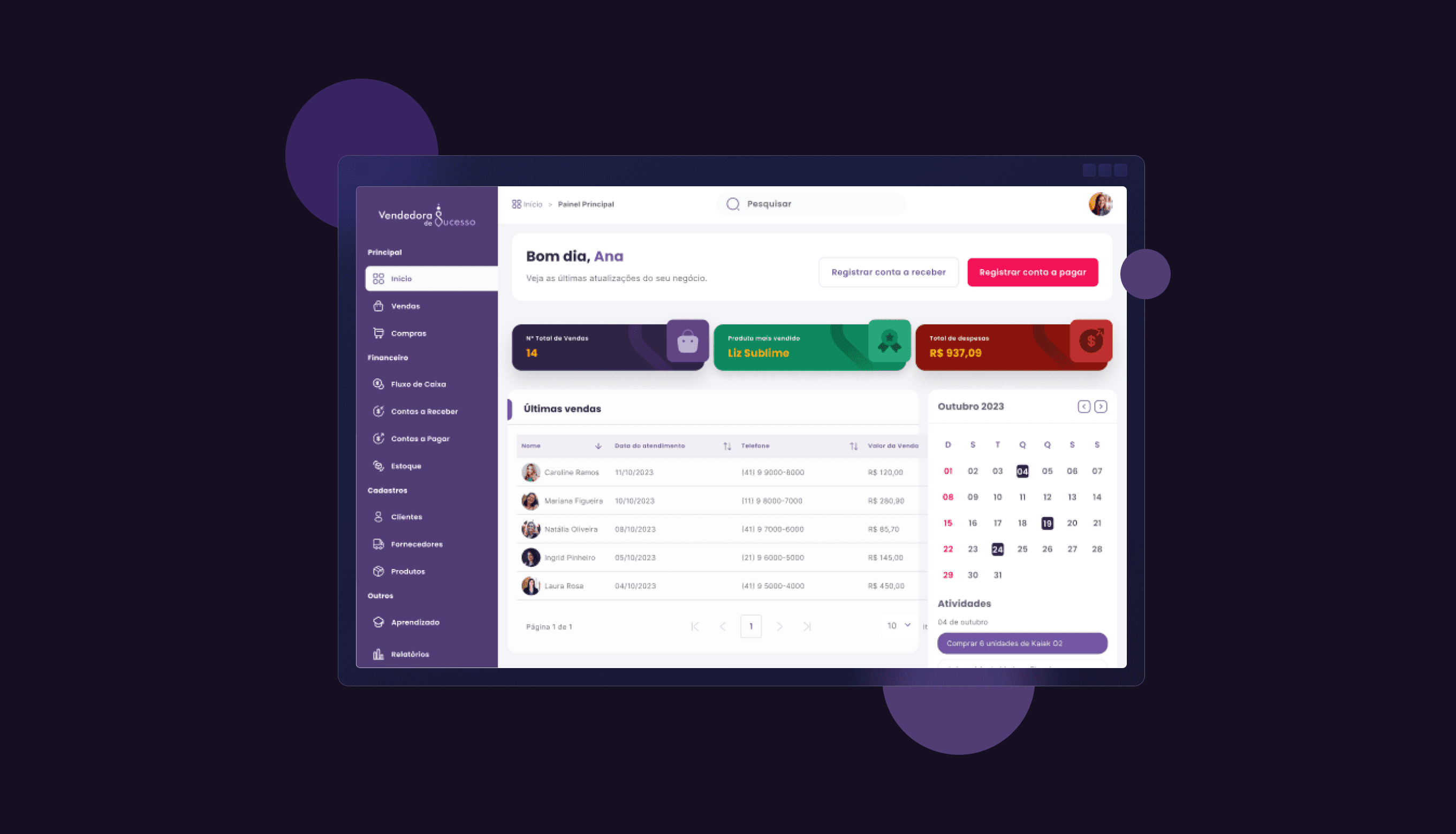
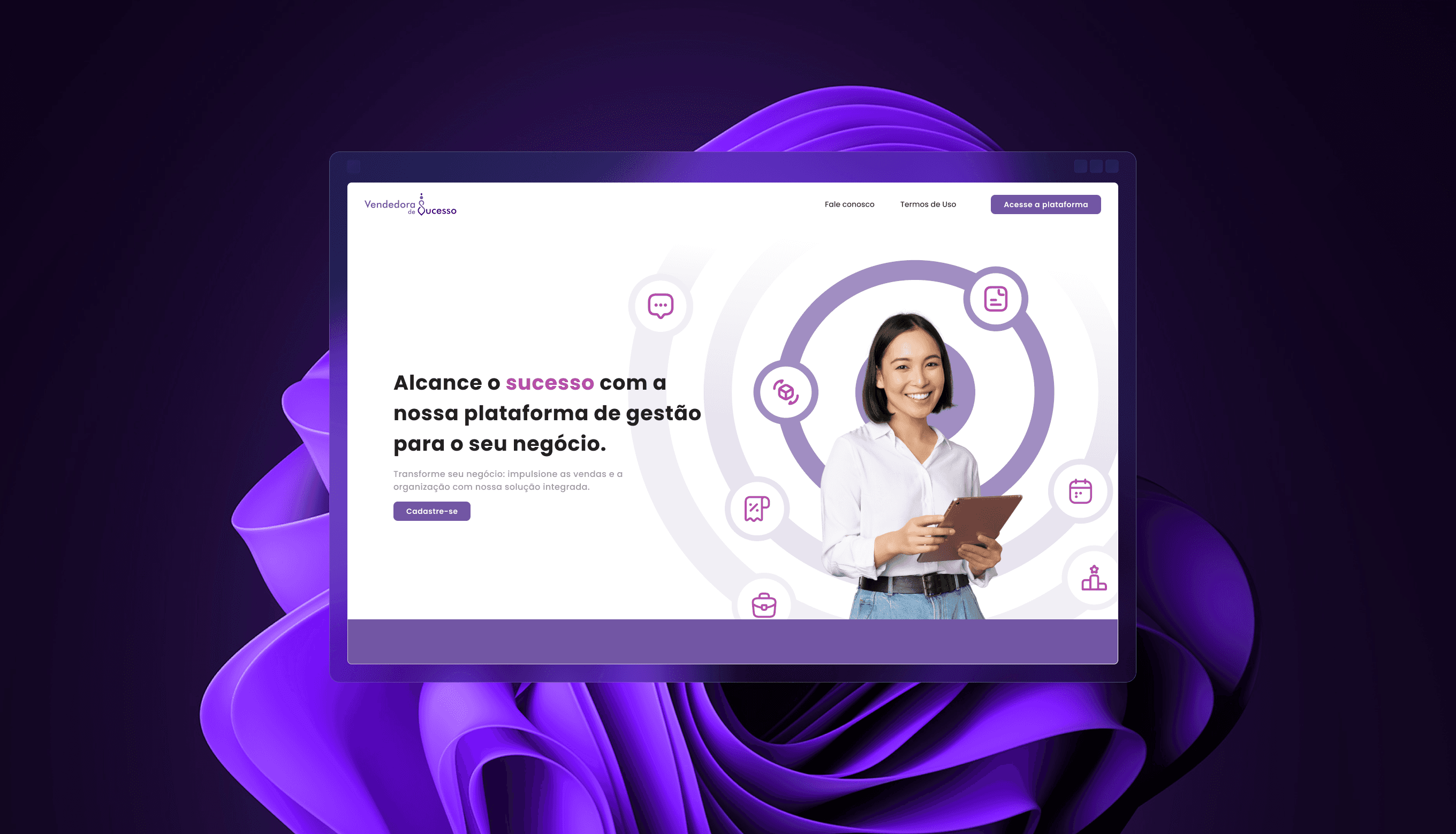
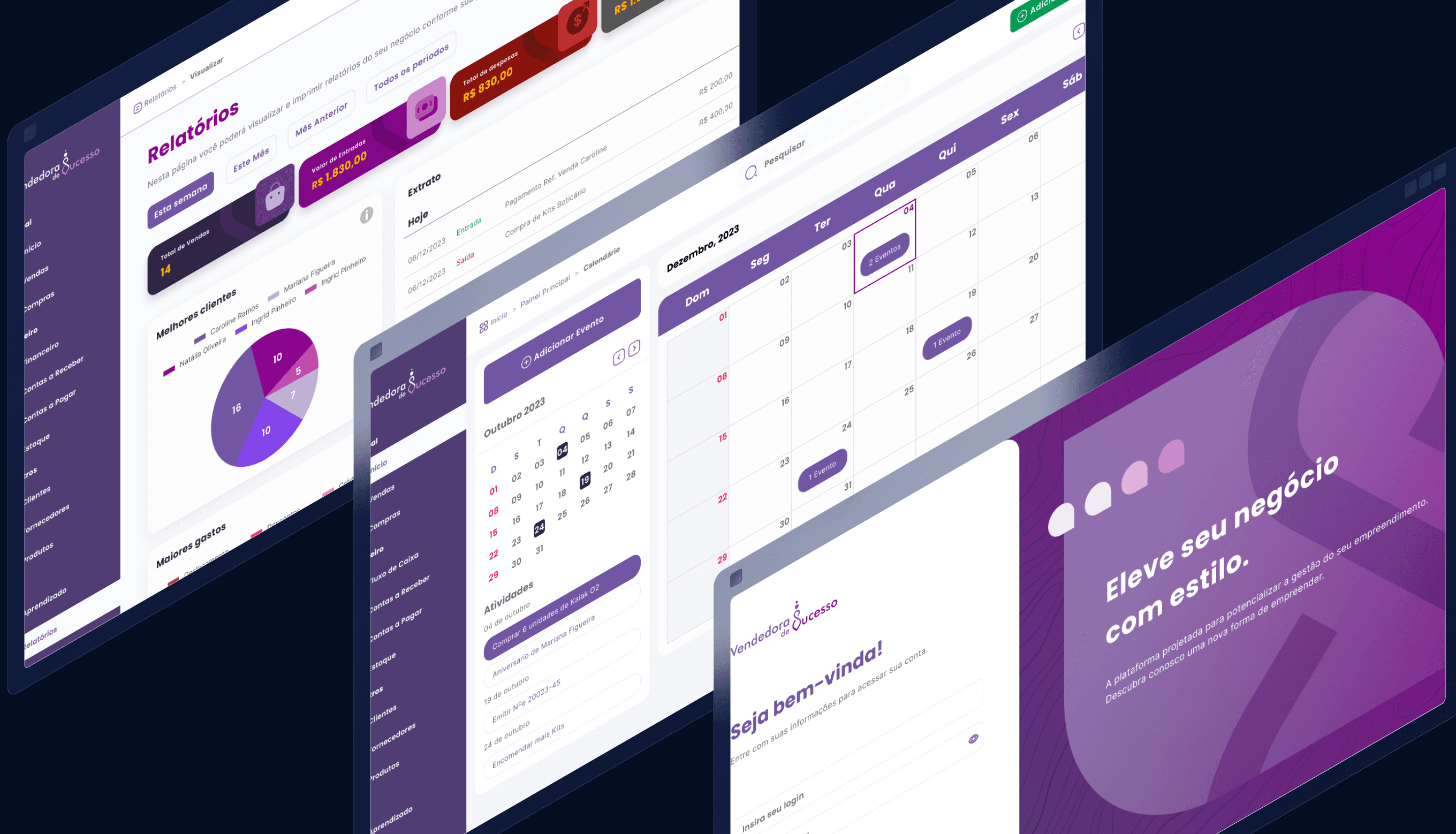
The identity translated into a SaaS interface and an acquisition landing page using tokens (color, type scale, spacing, radius) for consistency and efficient handoff. CTAs, headlines, and social proof on the landing balanced credibility and accessibility, guiding visitors toward sign-up with clear value statements anchored in everyday workflows.
Each module — Dashboard, Finances, Agenda, Contacts, Products/Inventory, Reports—was prototyped with realistic states and sample data. The project concluded in roughly three months with positive client feedback; usage telemetry was not collected, and a measurement plan was left as a recommended next step.